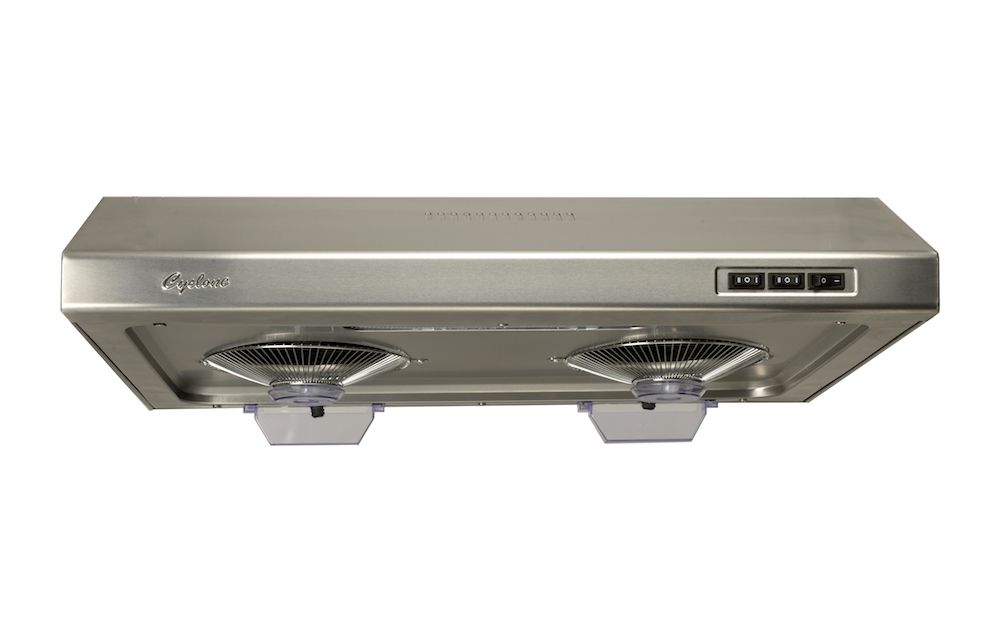
Cyclone range hoods offer innovative kitchen ventilation solutions. These devices remove cooking odors, smoke, and grease from the air, keeping kitchens clean and fresh. Cyclone range hoods come in various styles, including wall-mounted, island, undermount, and insert models, to suit different kitchen layouts and design preferences.
Cyclone’s product line features powerful and efficient ventilation systems. The BX600 insert, for example, boasts a 600 CFM airflow capacity, making it ideal for high-heat cooking. Many models incorporate user-friendly features like three-speed controls, LED lighting, and dishwasher-safe filters for easy maintenance.
Homeowners can choose from a range of Cyclone products to meet their specific needs. The NA940D undermount model offers a robust 680 CFM blower and filterless technology. For those seeking a wall-mounted option, Cyclone provides stainless steel hoods with capacities up to 550 CFM, combining functionality with sleek design.
Cyclone Range Hoods
A Cyclone range hood is designed to deliver strong, efficient ventilation while fitting seamlessly into modern kitchen designs. Whether you cook frequently, use high‑heat appliances, or want to eliminate lingering odors, cyclone‑style range hoods are built to handle heavy airflow demands without sacrificing style or efficiency.
This guide explains what a cyclone range hood is, how it works, why it’s popular, and what to consider before buying one.
What Is a Cyclone Range Hood?
A cyclone range hood uses high‑velocity airflow and centrifugal force to capture smoke, grease, steam, and odors more effectively than standard hoods. Instead of relying solely on straight airflow, cyclone systems spin air in a vortex, improving particle separation and filtration.
These range hoods are commonly found in:
- High‑performance residential kitchens
- Open‑concept homes
- Commercial‑inspired cooking spaces
How Cyclone Ventilation Works
Cyclone range hoods operate using a vortex airflow pattern:
- Cooking fumes are pulled upward at high speed
- Air spins inside the hood chamber
- Grease particles are forced outward and trapped in filters
- Cleaned air is vented outside or recirculated
This process allows for better grease capture and more consistent airflow, even at lower fan speeds.
Key Benefits of a Cyclone Range Hood
1. Superior Ventilation Power
Cyclone range hoods typically offer:
- 600–1,200+ CFM (cubic feet per minute)
- Effective smoke removal for gas, induction, and professional ranges
Ideal for:
- Wok cooking
- Searing
- Grilling indoors
- Multi‑burner use
2. Improved Grease Capture
The centrifugal airflow design:
- Reduces grease buildup
- Protects ductwork
- Extends motor lifespan
This also means less frequent cleaning compared to traditional hoods.
3. Modern, Sleek Design
Most cyclone range hoods feature:
- Stainless steel or tempered glass
- Minimalist profiles
- Wall‑mounted, island, or insert styles
They complement contemporary and industrial kitchen designs.
4. Quieter Operation at High Power
Despite high airflow ratings, cyclone systems often:
- Reduce turbulence noise
- Distribute air more evenly
- Operate quieter at mid to high speeds
5. Better Indoor Air Quality
By efficiently removing:
- Smoke
- Grease
- Moisture
- Cooking odors
Cyclone hoods help maintain healthier air, especially in airtight modern homes.
Ducted vs. Ductless Cyclone Range Hoods
Ducted (Vented Outside)
✅ Best performance
✅ Removes air completely
❌ Requires exterior ducting
Ductless (Recirculating)
✅ Easier installation
✅ Uses charcoal filters
❌ Less effective for heavy cooking
Tip: Cyclone hoods perform best when ducted outside.
What to Look for When Buying a Cyclone Range Hood
CFM Rating
- Electric cooktops: 400–600 CFM
- Gas or high‑heat cooking: 600–1,200+ CFM
Filter Type
- Baffle filters (preferred for cyclone systems)
- Dishwasher‑safe stainless steel filters
Noise Level (Sones)
- 1–3 sones: very quiet
- 4–6 sones: moderate
- 7+ sones: loud
Look for multi‑speed fans to balance power and noise.
Size & Coverage
- Hood should be at least as wide as your cooktop
- Ideally 3–6 inches wider on each side
Mounting Height
- Electric ranges: 20–24 inches
- Gas ranges: 24–30 inches
Maintenance & Cleaning Tips
- Clean grease filters every 1–3 months
- Wipe exterior weekly
- Replace charcoal filters (ductless) every 6–12 months
- Inspect ductwork annually
Regular maintenance keeps cyclone airflow efficient and quiet.
Cyclone Range Hood vs. Traditional Range Hood
| Feature | Cyclone | Traditional |
|---|---|---|
| Ventilation Power | Very High | Moderate |
| Grease Capture | Excellent | Average |
| Noise Control | Better at high speeds | Louder |
| Design | Modern | Traditional |
| Cost | Higher | Lower |
Related Topics You May Be Interested In
Is a High‑CFM Range Hood Necessary?
High‑CFM hoods are recommended if:
- You cook frequently
- Use gas ranges
- Have an open kitchen layout
Do You Need Make‑Up Air?
In many areas, hoods over 400 CFM require a make‑up air system to replace exhausted air.
Best Cooktops for Cyclone Range Hoods
- Gas ranges
- Pro‑style cooktops
- Induction with high‑heat settings
Final Thoughts
A cyclone range hood is an excellent investment for serious home cooks and modern kitchens. With superior airflow, improved grease capture, and sleek aesthetics, it offers a noticeable upgrade over standard ventilation systems.
If you’d like, I can:
- Help choose the right CFM for your kitchen
- Compare top cyclone range hood brands
- Explain installation or code requirements
Key Takeaways
- Cyclone range hoods offer diverse styles and powerful ventilation options for kitchens
- Features like adjustable speeds, LED lighting, and easy-clean filters enhance user experience
- Cyclone’s product range caters to various kitchen layouts and ventilation requirements
Essential Features of Cyclone Range Hoods
Cyclone range hoods offer powerful ventilation and stylish designs to enhance kitchen functionality. These hoods come with key features that improve air quality and cooking experiences.
Material Quality and Finish Options
Cyclone range hoods are crafted from high-quality stainless steel. This material ensures durability and resistance to corrosion. Stainless steel also provides a sleek, modern look that complements various kitchen styles.
Finish options include classic stainless steel, black, and white. Black stainless steel is gaining popularity for its sophisticated appearance. These finishes allow homeowners to match their range hood to other appliances or kitchen decor.
The non-stick aluminum fan blades in Cyclone hoods are designed for efficient air movement. They resist grease buildup, making maintenance easier.
Types of Cyclone Range Hoods
Cyclone offers several types of range hoods to suit different kitchen layouts. Wall-mounted hoods are a popular choice for kitchens with stoves against a wall. They provide powerful ventilation while serving as a focal point.
Undermount hoods fit discreetly beneath cabinets. These models are ideal for kitchens with limited space or where a more subtle look is desired.
Island hoods are designed for kitchens with central cooking areas. They hang from the ceiling and provide 360-degree ventilation coverage.
Insert hoods can be customized to fit existing cabinetry. This option allows for a seamless integration with the kitchen’s design.
Filter Types and Maintenance
Cyclone range hoods feature stainless steel baffle filters. These filters are highly effective at trapping grease and cooking particles. They help maintain clean air in the kitchen.
Baffle filters in Cyclone hoods are designed to be dishwasher-safe. This feature simplifies the cleaning process and ensures optimal performance.
Some models include a quick-release mechanism for the filters. This design allows for easy removal and cleaning.
Regular filter maintenance is crucial for the hood’s efficiency. Cyclone recommends cleaning the filters every 1-2 months, depending on cooking frequency.
Installation and Ventilation
Proper installation and ventilation are crucial for a cyclone range hood’s effectiveness. The setup process involves careful planning and execution to ensure optimal performance and safety.
Ductwork Considerations
Ductwork plays a key role in the ventilation system of a cyclone range hood. The standard duct size is 6″ for most models. Smooth, rigid metal ducts are preferred over flexible ones. They offer less air resistance and better airflow.
Shorter duct runs with fewer bends improve efficiency. Each bend reduces airflow by about 15%. Insulated ducts prevent condensation in colder climates.
Proper sealing of all joints is essential. This prevents air leaks and maintains maximum suction power. Use metal tape or mastic sealant for best results.
Outdoor venting is ideal. It removes cooking odors and moisture completely from the home. If outdoor venting is not possible, some models offer recirculating options with charcoal filters.
Insert Installation and Integration
Insert installation requires precise measurements and careful planning. The hood should be mounted 28″ to 30″ above the cooking surface. For gas stoves, a minimum of 30″ is required for safety.
Start by marking the centerline of the installation area. Use a level to ensure accuracy. Secure the mounting bracket to wall studs for stability.
Most inserts come with adjustable brackets. These allow for fine-tuning the fit within the cabinet or custom enclosure. Ensure proper alignment with the cooktop below.
Electrical connections must comply with local codes. A dedicated circuit is often recommended. Some models may require hardwiring, while others plug into a standard outlet.
Test the fan and light functions before finalizing the installation. This helps identify any issues early in the process.
Advancements in Cyclone Range Hood Technology
Cyclone range hoods have seen significant improvements in recent years. These advancements focus on reducing noise levels and adding convenient features for users.
Noise Reduction Technologies
Cyclone has made strides in quieter operation. New models use advanced fan blade designs to minimize turbulence. Some hoods feature sound-absorbing materials in the motor housing. This cuts down on vibrations and muffles noise.
Dual-motor systems allow for lower RPMs while maintaining suction power. This results in quieter performance during everyday cooking. High-speed settings are still available for intense cooking situations.
Smart speed controls adjust fan power based on heat and smoke levels. This keeps noise to a minimum when full power isn’t needed.
Innovative Features for Convenience
LED lighting is now standard in many Cyclone range hoods. These lights provide bright, energy-efficient illumination of the cooking surface. Some models offer adjustable color temperatures to suit different moods or times of day.
Touch controls make operation simple and intuitive. Digital displays show fan speed and filter status at a glance.
Automatic shut-off timers let users set the hood to run for a specific duration after cooking. This helps clear lingering odors without wasting energy.
Filterless technology in some models eliminates the need for regular filter cleaning or replacement. This saves time and reduces maintenance costs for homeowners.
Frequently Asked Questions
Range hood installation, maintenance, and performance are common concerns for homeowners. These questions cover key aspects of range hood use and care.
What steps are involved in installing an under cabinet range hood?
Installing an under cabinet range hood requires careful planning and execution. First, measure the space and choose a compatible hood size. Turn off power to the existing hood or outlet. Remove the old hood if present. Mark the new hood’s mounting points on the cabinet. Drill pilot holes and install mounting screws. Connect the ductwork and electrical wiring. Finally, secure the hood to the cabinet and test its operation.
How does one replace a filter in a range hood?
Replacing a range hood filter is a simple process. Locate the filter compartment, typically underneath the hood. Remove the old filter by sliding or unclipping it. Clean the filter area if needed. Insert the new filter, ensuring it fits securely in place. Some hoods use washable filters that can be cleaned and reused rather than replaced.
What are the specifications for a strong CFM in a range hood?
CFM (Cubic Feet per Minute) measures a range hood’s airflow capacity. A strong CFM for residential use typically ranges from 300 to 900. Larger kitchens or high-output cooktops may require 600 CFM or more. Professional-grade hoods can exceed 1000 CFM. Local building codes may limit maximum CFM, so check regulations before purchasing.
What should be considered when looking for replacement parts for a range hood?
When seeking replacement parts for a range hood, consider the hood’s make, model, and year. Verify part compatibility with the manufacturer’s specifications. Common replacement parts include filters, light bulbs, and fan motors. Quality and durability are important factors. OEM parts often provide the best fit but may cost more than generic alternatives.
How can one replace the light bulb in a range hood?
Replacing a range hood light bulb is straightforward. Ensure the hood is cool and unplugged. Locate the light cover and remove it. Carefully unscrew the old bulb and insert the new one of the same type and wattage. Replace the cover and test the new bulb. Some hoods use LED lights, which may require professional replacement.
Are 400 CFM range hoods sufficient for typical kitchen use?
A 400 CFM range hood is adequate for many home kitchens. This airflow rate suits standard four-burner cooktops and ranges up to 30 inches wide. It effectively removes cooking odors, smoke, and grease in average-sized kitchens. For larger cooking surfaces or frequent high-heat cooking, a higher CFM rating may be necessary.